4 Typhoon Essentials

Every Filipino Should Have
Handa ka na ba for typhoon season?
These must-haves ensure you always have a backup plan.
On average, about 20 storms enter the country every year.
While the weather is out of our control, how we handle emergencies is.
These are our recommendations for peace of mind when the weather gets rough.
Typhoon Essentials Checklist:
1. Food and water supplies
Have at least three days’ worth of bottled water and ready-to-eat goods. Don’t forget baby food or any family members’ special dietary needs.
2. Secure Document Folder
Keep important documents, or photocopies of IDs, medical records, titles, and bank info in a waterproof envelope. These are vital during recovery and should fit into your Go Bag
3. Evacuation Bag (Go Bag)
If you need to move fast, you won’t waste precious time packing. Pre-pack an easy to carry bag with clothes, your documents, and your…
4. Emergency Kit with CM-Glucan
Include a flashlight, batteries, power bank, and whistle, with your usual medicines and CM-Glucan.
Imunomax is made with pure CM-Glucan. CM-Glucan produces more antibodies than Vitamin C and helps balance your immune system with proper diet and exercise. With the right preparation, every storm will feel a little less daunting.
MAHALAGANG PAALALA: ANG IMMUNOMAX AT IMMUNOMAX FORTE AY HINDI GAMOT AT HINDI DAPAT GAMITING PANGGAMOT SA ANUMANG URI NG SAKIT
ASC Ref. No. I0263N092425I
For many of us, our home offers a sense of protection we don’t
get from anywhere else. But little do we know, the place we feel
safest in, might not be as harmless as we think. Because deep in
the comfort of our own homes, there are threats silently lurking in
unsuspecting places, acting as allergens that trigger asthma
attacks and allergic rhinitis.
- Living Room Curtains, Tablecloths, Runners
These items in your home are part of unsuspecting places where dust mites, pollen, and animal dander can easily get trapped, causing allergies and asthma attacks. So, apart from the usual top of the bookshelf, coffee table, and window sills, make sure to add these to your dusting-off list too. - Stuffed Toys
Though cute, cuddly, and adorable, toys and plushies also unfortunately act as a great host to indoor allergens. The pile in your bedroom can easily become a breeding ground for dust mites, as they thrive in warm and humid places. - Cockroach Droppings
You read that right. Apart from generating fear in most of us, cockroaches also play a role in adding to allergens inside our homes. These creepy crawlers’ droppings contain a specific kind of protein, which is then known to cause allergies. - Mold
When combined with humidity, mold can be a very serious problem both for your health and your home. They can spawn easily when wet kitchen sponges are left out, bathroom rugs are left damp for too long, etc. In any case, know that they are a very common cause of allergies, and they are indeed something to watch out for in your home. - Smoke/Smog
Even if you don’t live with someone who smokes, outdoor pollution is still a concern. When someone smokes or smog enters your home, particles are trapped in the air or your furniture, leaving them inside your home to trigger or worsen asthma attacks and allergic rhinitis.
Before you panic, keeping a home where allergens are kept under
control is possible.
- Vacuum once or twice a week.
Apart from sweeping and dusting off, adding in the extra effort to vacuum will also greatly assist you in minimizing the allergens in your home. Invest in a good quality vacuum to ensure that dust is cleared up, instead of being scattered into the air. - Keep windows and doors closed.
Wind can stir up allergens settled on the ground. It’s best to prevent pollen, smoke, and dust from entering your home so you don’t get an additional layer of allergens getting comfortable in your home. - Ensure no damp areas stay damp for too long.
As we’ve discussed, mold spores are a common, but very serious cause of allergies. Avoid them by reducing moisture indoors. Ensure that any leaks are fixed, dehumidifiers are set in place, and your house plants are limited to only a few to keep the humidity under control. - Take extra steps.
Symptoms such as an itchy nose, throat, or eyes, sneezing, stuffiness, and a runny nose, are caused by an overreactive immune system. When your immune system overreacts, it produces allergic antibodies that travel to cells and release chemicals, which cause an allergic reaction. An underactive immune system on the other hand, may allow simple allergies to last longer, and you may be more prone to acquiring other sicknesses. What you need is a balanced immune system. And for this, CM-Glucan is here to help.
CM-Glucan is a natural immunomodulator that is 100x more absorbable by the body. It produces more antibodies compared to Vitamin C, and most of all, it helps balance your immune system so you can stay protected against allergens that trigger allergic rhinitis and asthma attacks. Because you deserve to be confidently protected, even while relaxing indoors.
Immunomax is a food supplement made of pure CM-Glucan.
Sources:
https://aafa.org/allergies/prevent-allergies/control-indoor-allergens/
https://lungcare.net/10-allergy-triggers-that-could-be-lurking-in-your-home/
http://www.aaaai.org/tools-for-the-public/conditions-library/allergies/indoor-allergens-ttr
Feeling constantly under the weather? Sneezing, wheezing, and coughing more often? It could be your allergic rhinitis and asthma being triggered by the rainy days.
Rainy season is allergy season
Our immune system can get overreactive because allergens are more concentrated during this period. Molds and dust mites thrive and multiply in humid conditions, while the heavy downpour causes pollens to break off and disperse quickly, making them easier to be inhaled.
While we don’t have control over the weather, we can control how we want to respond to it. We can stay ahead of the allergy season by having a balanced immune system with Immunomax.
CM-Glucan for a balanced immune system
Immunomax is the only food supplement made with pure CM-Glucan. CM-Glucan is a natural immunomodulator that produces more antibodies than vitamin C and keeps a healthy balance in your immune system. It’s a super ingredient that is proven effective to alleviate allergic rhinitis and asthma attacks.
Don’t let the allergy season rain on your plans and get in the way. Take Immunomax!
REFERENCES:
- https://www.health.harvard.edu/blog/thunderstorm-asthma-bad-weather-allergies-and-asthma-attacks-202206222766
- https://www.verywellhealth.com/weather-allergies-5199163
- https://www.actionnews5.com/2022/10/15/breakdown-why-rain-can-sometimes-make-your-allergies-worse/

The holiday season is a time for us to meet our loved ones and celebrate the year that was. However, that shouldn’t mean becoming complacent regarding our safety, especially since these gatherings will place us within close proximity to other people, increasing the risk of infection. With that in mind, we have a few tips to help you and your family stay safe as you host your get-togethers.
Keep the air flowing.
Proper ventilation is one of the key ways to ensure bacteria and viruses don’t linger inside your home. While you have guests indoors, it’s best to keep your doors and windows open and point your electric fans at these openings, blowing outside. If you have exhaust fans, turn them on for the duration of your gathering and until an hour after your guests have left.
Limit the number of guests.
We suggest keeping your gatherings small and intimate. In cases where this isn’t an option, though, make sure everyone is masked up and stays in the largest, most well-ventilated space in your home.
Gather outdoors.
Of course, meeting outdoors is far safer than meeting indoors, since proper ventilation isn’t an issue anymore. Try meeting in a courtyard, garden, or any open-air event space, and remember to practice physical distancing while you’re there!
Vax when possible.
The best way to prevent infections and protect your most at-risk guests is vaccination. Because of this, it’s ideal to request that all your guests be fully-vaccinated before they come to your gathering.
Maintain a balanced immune system.
Even with all our preparations, we still can’t fully eliminate the risk of infection when we actually meet people face-to-face. That’s why it pays to have a balanced immune system when we do, so that our immunity is in optimum form to protect us. For situations like these, we recommend Immunomax with CM-Glucan!
Sources
- https://health.ucdavis.edu/news/headlines/6-hacks-to-outdoor-ify-your-indoors-to-reduce-covid-19-spread—/2022/02
- https://www.who.int/westernpacific/news-room/feature-stories/item/six-ways-to-protect-yourself-and-those-around-you-during-the-holiday-season

Studies show that at two years of age, a child’s immune system is underdeveloped and only fully matures when they reach 7-8 years. Because of this, it’s important for parents to start taking care of their child’s immunity early on in life. Here are a few ways you can help the development of your child’s immune system:
Ensure routine checkups with their pediatrician and vaccines are up to date.
Seeing their pediatrician regularly allows you to assess if your child has any underlying growth or development issues that might affect their immunity. Knowing these can actually help you.
Vaccination is also essential to assuring that your child’s immunity develops properly. We suggest working with their pediatrician to plan a proper schedule for them.
Maintain proper home management.
It sounds surprising, but home management plays an important role in your child’s immunity. Things like getting air and water filters changed on time or doing the laundry regularly goes a long way in providing your child with a clean and stress-free environment.
Observe good hygiene.
Protecting your child from exposure to bacteria and viruses while their immune system is still developing will definitely help. When going outside with them, always encourage them to clean their hands regularly.
Keep them active.
Physical exercise may result in fewer infections among children, which is important in ensuring that their immune system develops properly.
Give them immunity-reinforcing food.
While they’re still young, it pays to be watchful with their diet. Vegetables like broccoli, spinach, and red bell peppers provide the right vitamins and antioxidants to support immune system health. For sweeter treats, try blueberries, oranges, and kiwis.
Supplement their diet with a natural immunomodulator
A natural immunomodulator like CM-Glucan can help balance your child’s immune system. It allows the immune system to produce more antibodies than Vitamin C.
References
- https://www.ncbi.nlm.nih.gov/pmc/articles/PMC7293525/#:~:text=However,%20the%20immune%20system%20of,7%E2%80%938%20years%20of%20life
- https://www.northshore.org/healthy-you/the-importance-of-regular-pediatric-doctor-visits/
- https://howtogetorganizedathome.com/home-management/
- https://www.who.int/emergencies/diseases/novel-coronavirus-2019/advice-for-public
- https://www.uthscsa.edu/patient-care/physicians/news-item/children-need-excercise-covid-pandemic

Normalcy has somehow returned but the threats remain the same. And there’s no other way to face its comeback than by having an immune system that is ready. As you navigate the “return-to-office” life in the new normal, let’s gear up your health for the battle.
Get vaccinated
Many of the existing health threats will likely not go away anytime soon. Good thing, all thanks to scientific experts, there are vaccines available to protect yourself against them. Vaccines lower your chances of getting infected or severely affected by many life-threatening diseases. So, make sure you’re up to date with all the necessary vaccines these days because the immune system is always worth a shot. Continue to observe healthy distances and safety precautions As normal days begin to kick in, the health restrictions start to loosen up. However, this doesn’t mean you should let your guard down already. Try your best to avoid flocking with your workmates in small areas of the office and wear your mask all the time especially when in crowded places.
Check your health regularly
To check on your own health is also ensuring the welfare of others, especially of those you go home to after staying the whole day outside. Over-the-counter test kits for certain illnesses are available in drug stores already. Also, set an appointment with your doctors when you need to.
Balance your immune system with CM-Glucan
An immune system capable of guarding the body against pathogens is a balanced immune system. One thing that can help you get that much needed balance is taking immunomodulators like CM-Glucan. CM-Glucan is an immunomodulator that is 100x more absorbable by the body than Beta Glucan. It also produces more antibodies than Vitamin C. It is best taken with proper diet and exercise.
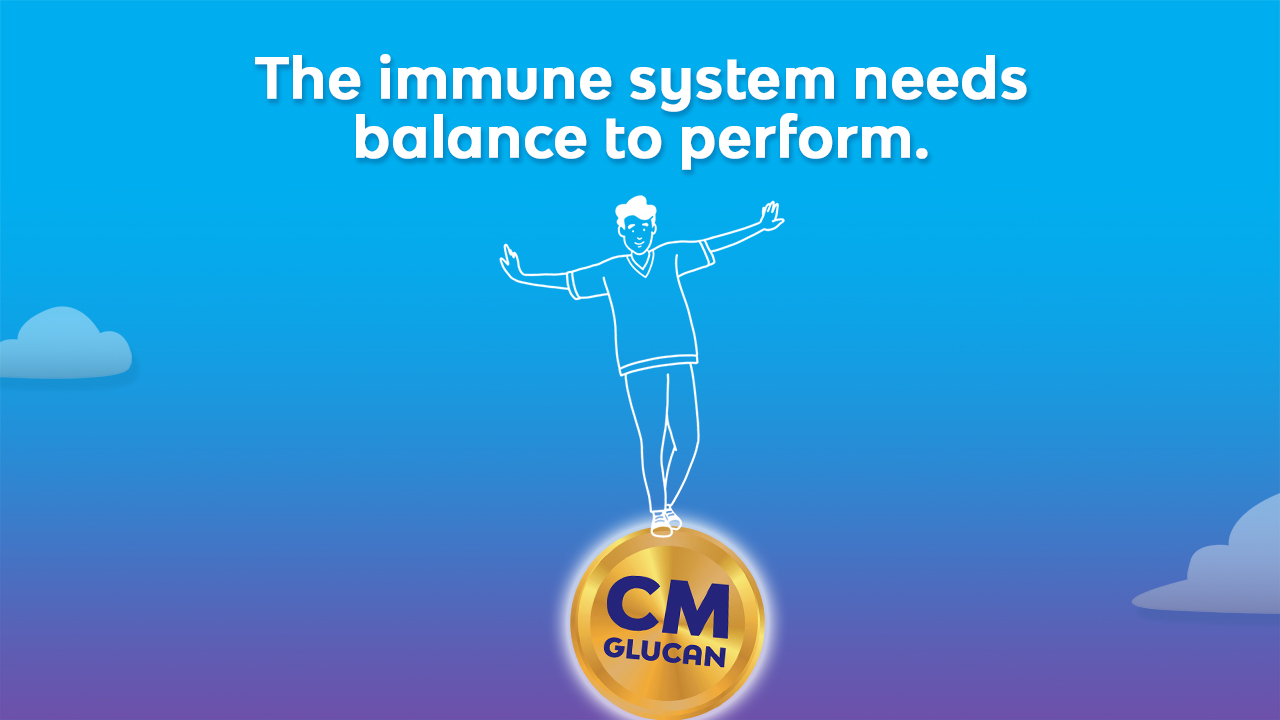
Our health and lifestyle are crucially interrelated. Think of them as if they’re performers of the circus where everyone needs to do their own stellar performances to pull off a great show.
Our immune system is a one busy network in our body that does a lot of things. It juggles a lot of complexities just to be able to keep us away from threats. And just like any juggler, it needs balance to gracefully fulfill its performance.
If the immune system loses its balance, it would be either overreactive or under-reactive. An overreactive immune system leads to becoming more prone to having allergies while an under-reactive one will make you susceptible to viruses.
But balancing our immune system isn’t just enough to get us by. Our whole existence should embody balance from our physical health to mental health to be well all throughout.
Apart from the supplements we take and health precautions we observe, good nutrition and physical movements also help in taking care of our immune system. Consuming nutrient-dense foods and working out are vital in getting the benefits that we need to support our immune function.
On the other hand, how we are on the outside is likely a reflection of how we’re doing on the inside. That’s why our mental well-being is just as important. Mental and immune health are maybe two completely aspects of our well-being, but they are fundamentally linked to each other. Our emotions and thoughts are contributing factors to a healthy immune response.
To further help us balance the immune system, taking natural immunomodulator CM-Glucan can also help us with that. It is 100x more absorbable by the body and produces more antibodies than Vitamin C.
Immunomax is a food supplement made with pure CM-Glucan.

The past two years have been eventful which led into many changes in our society, especially in the workforce. With many companies permanently adapting the hybrid setup where there is a balance between working onsite and remotely, such major change would also require major adjustments from many employees.
Of course, despite the leniency we’re experiencing, we should keep in mind that threats are still evolving. Hence, the importance of remaining mindful of our health and wellness as we brave this new work culture.
Balance your life for a job well done
Loosen up and free your spirit! Your personality should go beyond work. Take time to learn new hobbies, explore new things, and hangout with your work friends. Learning how to have fun is preventing yourself from burn out or getting sick of your job. If you have a life to sustain outside your work, you will have a better mindset and motivation to perform better.
Balance all your tasks for both physical and mental health
Good things come to those who play smart and one of those is staying healthy! Having a plan on how to tackle your workload for the day and improving your focus in accomplishing your tasks can help you maximize the day and make time for rest. Stress and fatigue affect our physical and mental health more than we know that’s why resting is just as important as working hard.
Balance Your Diet and Fitness
Regardless of how many health precautions you observe, if proper diet and exercises are something you don’t practice then you will remain susceptible to illnesses. Eating the right kind of food can help your body get the nutrition it needs to combat sickness and get you through a day of hard work, while exercise can help increase your strength and stamina.
Balance with CM-Glucan
The hybrid work setup can be maximized if we find the right balance into many things in our lives. But when it comes to the immune system, balance can be achieved with the help of CM-Glucan. It is a natural immunomodulator that aids in balancing the immune system. CM-Glucan has more antibodies vs Vitamin C and is 100x more absorbable by the body vs Beta Glucan.
Immunomax is a food supplement made with pure CM-Glucan.
Health threats will always emerge and evolve into something either less dangerous or deadlier than ever and it is up to us on how we are going to live with them.
Prioritizing ourselves equates with setting some boundaries from these threats. Their existence is not something we can control every time but the lifestyle we choose can make a difference in co-existing with them.
Through proper care for our health, these dangers can come close to us but they will have a hard time affecting us.
Here are some ways to live guarded against health threats
Wear a mask
Whether there’s a known threat spreading around or none, wearing a mask casually in public or crowded places will always be a great idea. Using a mask does not only protect but it can also save the life of others. It can prevent the spread of respiratory diseases. Masks help in blocking harmful pathogens from reaching the body.
Get Vaccinated
Vaccines save lives and it took years of intensive studies for experts to come up with the best jabs against diseases.Vaccines also prevent illnesses from mutating into something more harmful which is essential in avoiding global health crises.
Be considerate of others
Seeking help from medical professionals and not exposing anyone to you while you’re aware of your illness are keys in saving many lives. As there are people who are more susceptible to health complications, being responsible in managing our health equates with saving lives.
Eat well and move
The quality of food we take and the exercises we do greatly influences our physical well-being. By consuming healthy food and working out daily, we absorb all the necessary nutrients and benefits that could boost our defenses against illnesses.
Helping our immune system navigate a world full of threats is all about putting a balance of all these things in our lives. Speaking of balance, CM-Glucan is a natural immunomodulator that aids in the balancing of the immune system.
Think of the immune system as if it’s a superhero with special powers that could save us from danger. But just like any superhero, our immune system also needs an efficient sidekick to fight threats and that role goes to Beta-Glucan. Beta-Glucan is an immunomodulator known for helping the body produce more antibodies to fend off harmful invaders such as viruses. However, Beta-Glucan is completely insoluble in water which makes it hard to be absorbed by the body. This is where Carboxymethylation enters the picture.
Carboxymethylation is an intricate Swiss-patented process that makes CM-Glucan – a 100x more absorbable form of Beta Glucan. This process takes place by adding carboxy acid group into the molecules and the sodium from the acid group makes the Beta Glucan water soluble, thus, transforming it into CM-Glucan. Because of the high solubility of CM-Glucan, it greatly improves the way the immune system recognize pathogens and helps our immune cells wash out diseases more aggressively.
Along with proper diet, and exercise, CM-Glucan functions as a helpful natural immunomodulator that aids in the balancing of the immune system. After all, it won’t be monikered “The Better Glucan” for no reasons. Make your immune system strong and balanced now with CM-Glucan!